Quote
Email Us
Affinity & Capture Tags

Affinity & Capture Tags

Facilitate immobilization, purification, or pull-down experiments.
Order Now
Highlights of Affinity & Capture Tags

Highlights of Affinity & Capture Tags

Used for immobilizing, purifying, or isolating specific molecules—including amino modifiers, biotinylation, and thiol modifications—these tags function by selectively binding to complementary ligands,enhancing affinity, streamlining processes such as detection and functional analysis.

Applications: Protein interaction studies, EMSA probes, functionalized chips.

Service Details of Affinity & Capture Tags


Affinity & Capture Tags

Affinity and capture tags are essential tools in molecular biology and biotechnology, designed to facilitate the specific immobilization, purification, or pull-down of target molecules (e.g., proteins, nucleic acids, or complexes). These tags enable highly selective interactions with complementary ligands or surfaces, streamlining processes such as detection, isolation, and functional analysis.

Affinity & Capture Tags
AcryditeC7-NH2Thiol SH
BiotinC12-NH2Thiol SS
Biotin-TEGNH2Triple Biotin
C6-NH2DigoxinTriple SH

Amino: A primary amino group can be used to attach a variety of modifiers (such as fluorescent dyes) to an oligonucleotide or used to attach an oligonucleotide to a solid surface. Amino modifiers can be positioned at the 5’-end with either a standard (C6) or longer (C12) spacer arm. Amino modifications can be positioned at the 3’-end. Internal amino modifications can be introduced using an amino-dT base.

Biotin: Biotin-modified oligos bind tightly to streptavidin. The streptavidin can be labeled with fluorescent dyes and enzymes or mediate attachment to a solid surface. A variety of molecular biology assays and purification methods employ biotin. Biotin can be added to the 5’- or 3’-ends of an oligo using either a C6 (standard) or TEG (tetra-ethyleneglycol, 15 atom) spacer arm. 5' Biotin-TEG requires purification. Internal biotin modification can be introduced using a biotin dT base, which also requires additional purification.

Digoxigenin: Digoxigenin is a small hapten that can be conjugated to amino-modified oligos. Anti-digoxigenin antibodies allow capture or detection of a digoxigenin-labeled oligo and can be used in a variety of assay formats much like biotin/streptavidin.

Acrydite: Acrydite is an attachment chemistry based on an acrylic phosphoramidite that can be added to oligonucleotides as a 5’-modification. Acrydite-modified oligonucleotides covalently react with thiol-modified surfaces or can be incorporated into polyacrylamide gels during polymerization.

Thiol: A thiol group can be used to attach an oligo to a variety of fluorescent and nonfluorescent moieties or surfaces. Oligos containing thiol modifiers are shipped in their oxidized (disulfide) form and require chemical reduction by dithiothreitol (DTT) or Tris (2-carboxyethyl) phosphine (TCEP) prior to use. View reduction protocol for thiol-modified-oligonucleotides.


Cases of Affinity & Capture Tags

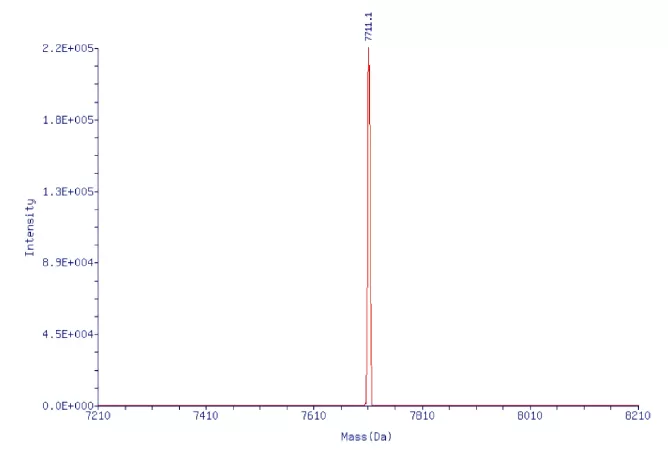
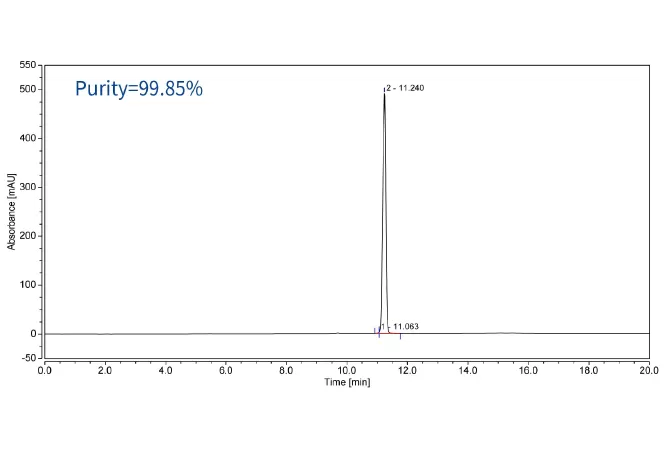
Modification: Biotin

MASS
MASS
High Purity
High Purity

Resources of Affinity & Capture Tags

Tsingke_Oligo Synthesis_Brochure_1.2.1.250805

Ordering Steps of Affinity & Capture Tags

Download the order form "Tsingke_DNA_Order Form.1.1.1.250815.csv" for DNA modifications or  "Tsingke_RNA_Order Form.1.1.1.250815.csv" for RNA modifications below and email it to info@tsingke.com.cn, or "Send Your Request" to submit your inquiry online. Please refer to "Tsingke_DNA_Modification List_1.1.1.250815.csv" or "Tsingke_RNA_Modification List_1.1.1.250815.csv"  sheet to paste special base and internal modification codes in your sequence.

Send Your Request
  • Tsingke_DNA_ Order Form_1.1.1.250815
  • Tsingke_DNA_ Modification List_1.1.1.250815
  • Tsingke_RNA_Order Form_1.1.1.250815
  • Tsingke_RNA_Modification List_1.1.1.250815

FAQs of Affinity & Capture Tags

What is the principle of amino modification, and what should be noted when using it?

Amino modifiers introduce a reactive amino group (−NH2) to oligonucleotides, enabling covalent conjugation with various molecules such as fluorophores, biotin, or surfaces.

Key points:

(1) The 5'Aminolinker (C6) modifier is attached to the 5′ sugar ring via phosphoramidite chemistry during synthesis (not to the terminal base).

(2) The amino group absorbs at 210 nm (not 260 nm) and cannot be detected by standard agarose or acrylamide gel electrophoresis.

(3) The 3'Aminolinker(C7) is compatible only with certain 5′ modifications (e.g., FAM, HEX, TET, Fluorescein, Biotin, phosphate). It is incompatible with dyes like Alexa Fluor® that also require an amine for conjugation.

(4) Amino modification remains a simple and cost-effective strategy. For most applications, the 5'C6-NH2 Modification is highly recommended.

What are the applications for using biotin-modified oligonucleotides?
What are the reduction steps for thiol-modified primers?
Contact Us
Explore the power of the Gene Factory and discover how Tsingke's integrated platform accelerates your R&D and product development.
Tsingke Updates
pop_close
pop_main
Subscribe to Our Newsletter

Stay updated with the latest industry news and expert insights. 

Subscribe now to receive:
        ● Industry updates
        ● Exclusive expert insights and analysis
Enter your email to stay ahead!

We use cookies to offer you a better browsing experience, analyze site traffic and personalize content. Part of the tracking is necessary to ensure SEO effectiveness,
By using this site, you agree to our use of cookies. Visit our cookie policy to learn more.
Reject Accept