Quote
Email Us
Backbone & Linkage Modifications

Backbone & Linkage Modifications

Improve nuclease resistance or enable site-specific cleavage.
Order Now
Highlights of Backbone & Linkage Modifications

Highlights of Backbone & Linkage Modifications

These modifications alter the natural structure of oligonucleotides to enhance nuclease resistance and stability in biological environments. The changes also enable precise conjugation with targeting molecules and improve pharmacokinetic properties, making them essential for developing effective therapeutic oligonucleotides and functional biomaterials.

Key applications include but are not limited to: therapeutic oligonucleotides, delivery system conjugation, and site-specific cleavage.

Service Details of Backbone & Linkage Modifications


Backbone & Linkage Modifications

Backbone and linkage modifications are engineered alterations to the natural phosphate-sugar backbone of oligonucleotides. These changes are primarily designed to enhance nuclease resistance, thereby improving stability in biological environments, or to introduce site-specific cleavage properties and conjugation handles for advanced applications. Such modifications are critical for the development of robust therapeutic oligonucleotides and functional biomaterials.

Backbone & Linkage Modifications

2′-O-hexadecanoyl

Carboxy

Maleimide

5'- (E)-Vinylphosphonate

Cholesterol

Methylene Blue

Aldehyde

DBCO

N-Acetylgalactosamine

Alkyne

Ferrocene

Phosphorothioate

Azide

inverted-dT

Phosphorylation

Phosphorylation: Adds a phosphate group to the 5' end of an oligonucleotide. This is essential for enzymatic ligation reactions (e.g., connecting DNA fragments with T4 DNA ligase) or for specific labeling protocols.

Phosphorothioate (PS): Replaces a non-bridging oxygen in the phosphate backbone with sulfur. This is the most important modification for therapeutic oligonucleotides (like ASOs and siRNA) because it dramatically increases resistance to nucleases (stability in blood/serum) and improves tissue distribution.

Inverted-dT: Attaches a deoxythymidine to the 3' end upside-down. This physically blocks the 3' end, preventing enzymes from adding or removing nucleotides. It is crucial for blocking degradation in applications like microarrays or FISH.

5'- (E)-Vinylphosphonate (EVP): A backbone modification that improves stability and helps trigger gene silencing mechanisms more effectively.

Maleimide: Reacts specifically and rapidly with thiol groups (-SH). This is the go-to chemistry for attaching oligonucleotides to cysteine residues on proteins or to other thiolated molecules.

N-Acetylgalactosamine (GalNAc): A sugar molecule that targets the liver. It binds to a receptor on liver cells, making it essential for many modern siRNA and ASO drugs.

2′-O-hexadecanoyl (Hd): A long fatty acid chain added to the RNA sugar. Improves cell penetration and delivery, similar to cholesterol.

Cholesterol: Attaches a cholesterol molecule to the oligonucleotide. Helps it hitch a ride into cells by associating with lipids and cell membranes.

Aldehyde: Reacts with amine groups (-NH₂). This is commonly used to label amine-containing molecules or for immobilizing oligonucleotides onto amine-coated surfaces.

Alkyne & Azide: This is the classic pair for CuAAC ("click") chemistry. They react together in the presence of a copper catalyst to form a stable triazole linkage. Great for general conjugation in non-living systems.



Cases of Backbone & Linkage Modifications

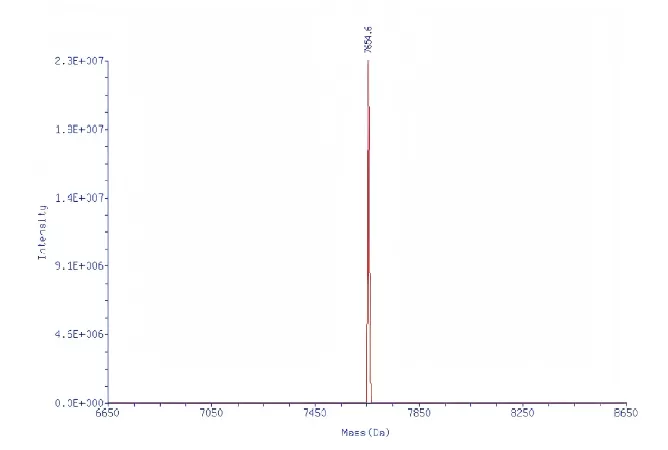
Modification: PS

MASS
MASS

Resources of Backbone & Linkage Modifications

Tsingke_Oligo Synthesis_Brochure_1.2.1.250805

Ordering Steps of Backbone & Linkage Modifications

Download the order form "Tsingke_DNA_Order Form.1.1.1.250815.csv" for DNA modifications or  "Tsingke_RNA_Order Form.1.1.1.250815.csv" for RNA modifications below and email it to info@tsingke.com.cn, or "Send Your Request" to submit your inquiry online. Please refer to "Tsingke_DNA_Modification List_1.1.1.250815.csv" or "Tsingke_RNA_Modification List_1.1.1.250815.csv"  sheet to paste special base and internal modification codes in your sequence.

Send Your Request
  • Tsingke_DNA_ Order Form_1.1.1.250815
  • Tsingke_DNA_ Modification List_1.1.1.250815
  • Tsingke_RNA_Order Form_1.1.1.250815
  • Tsingke_RNA_Modification List_1.1.1.250815

FAQs of Backbone & Linkage Modifications

​What are backbone and linkage modifications in oligonucleotides?

These are chemical alterations made to the natural sugar-phosphate backbone of oligonucleotides. They are designed to enhance properties such as nuclease resistance, stability in biological environments, and the ability to attach other molecules or enable site-specific cleavage.

Do Tsingke’s oligos come with 5' phosphorylation?
How can I functionalize oligonucleotides for conjugation to proteins or surfaces?
Contact Us
Explore the power of the Gene Factory and discover how Tsingke's integrated platform accelerates your R&D and product development.
Tsingke Updates
pop_close
pop_main
Subscribe to Our Newsletter

Stay updated with the latest industry news and expert insights. 

Subscribe now to receive:
        ● Industry updates
        ● Exclusive expert insights and analysis
Enter your email to stay ahead!

We use cookies to offer you a better browsing experience, analyze site traffic and personalize content. Part of the tracking is necessary to ensure SEO effectiveness,
By using this site, you agree to our use of cookies. Visit our cookie policy to learn more.
Reject Accept