



Quote
Email Us
Terminal Modifications

Terminal Modifications

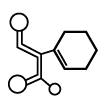
Adjust distance between functional groups or control structural flexibility.
Order Now
Highlights of Terminal Modifications

Highlights of Terminal Modifications

Nuclease protection · ligation · surface immobilization · gel embedding

Service Details of Terminal Modifications


Terminal Modifications

Modify the 5′ or 3′ terminus for nuclease protection, surface attachment, or to enable downstream enzymatic reactions.


CategorySub-categoryName (full)Abbreviation / CodeApplies toPositionFunction & mechanism (EN — for website copy)Typical applications
Terminal Modifications3′ end blockers3′ Inverted dT (InvdT / 3′-InvdT)InvdT / Inv-dTDNA / RNA3′3′ to 3′ phosphodiester linkage blocks 3′ exonuclease degradation. Does not require a 3′-OH, preventing extension by DNA polymerases. Standard stabilization for primers and probes.3′ exonuclease protection, non-extendable primers, stabilized probes
Terminal Modifications3′ end blockers3′-ddC (Dideoxycytidine)ddCDNA / RNA3′Chain-terminating dideoxynucleotide blocking 3′ extension. Commonly used in Sanger sequencing dideoxy termination and as a primer 3′-blocker.Sanger sequencing terminators, polymerase extension blocking, allele-specific PCR blockers
Terminal Modifications3′ end blockers3′-ECL3′-ECLDNA3′Electrochemiluminescence label enabling signal generation in ECL-based detection platforms (e.g., Meso Scale Discovery). Enables highly sensitive low-volume immunoassay detection.ECL-based immunoassays, Meso Scale Discovery platform, high-sensitivity detection
Terminal Modifications5′ reactive groups5′-AcryditeAcryditeDNA / RNA5′Acrylamide group for direct copolymerization into polyacrylamide gels. Covalent attachment — survives gel denaturation.Embedded oligo gels, in-gel hybridization, polyacrylamide bead functionalization
Terminal Modifications5′ reactive groups5′-CHO (Aldehyde)CHODNA / RNA5′Reactive aldehyde for hydrazone or reductive amination conjugation. Used for site-specific coupling to hydrazide- or amine-functionalized surfaces and proteins.Hydrazone conjugation, oligonucleotide-aldehyde surface coupling
Terminal Modifications5′ reactive groups5′-COOH (Carboxyl)COOHDNA / RNA5′Carboxyl group activated with EDC/NHS for amine coupling. Enables conjugation to amine-functionalized surfaces, nanoparticles, and proteins.EDC/NHS surface coupling, nanoparticle functionalization
Terminal Modifications5′ reactive groups5′-CHCH (Alkyne)CHCHDNA / RNA5′Terminal alkyne for CuAAC click chemistry with azide partners. Complementary to azide-modified oligos or azide-labeled surfaces.CuAAC click conjugation, oligonucleotide-surface attachment


Contact Us
Explore the power of the Gene Factory and discover how Tsingke's integrated platform accelerates your R&D and product development.
Tsingke Updates
pop_close
pop_main
Subscribe to Our Newsletter

Stay updated with the latest industry news and expert insights. 

Subscribe now to receive:
        ● Industry updates
        ● Exclusive expert insights and analysis
Enter your email to stay ahead!

We use cookies to offer you a better browsing experience, analyze site traffic and personalize content. Part of the tracking is necessary to ensure SEO effectiveness,
By using this site, you agree to our use of cookies. Visit our cookie policy to learn more.

Reject Accept